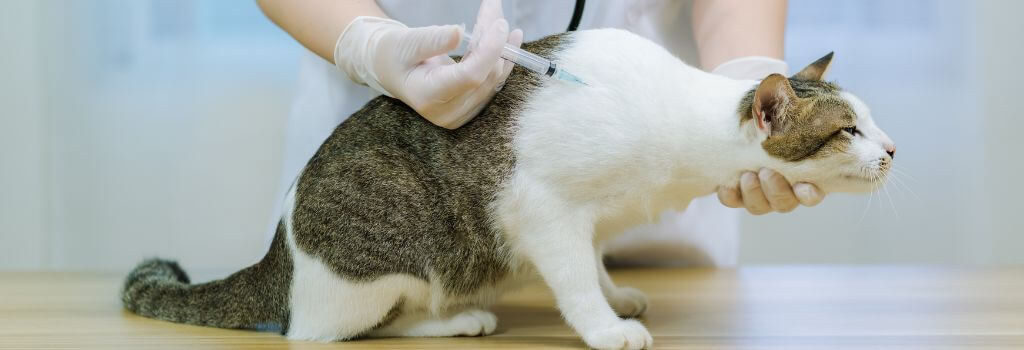
If your cat has had more than one upper respiratory infection, you already know how it goes. The sneezing starts. Then the runny nose and watery eyes. Maybe some congestion that makes eating difficult. You take them to the vet, get medication, things improve, and then a few weeks or months later the whole cycle starts again. It is frustrating, it is worrying, and most owners who go through it more than twice start wondering whether there is something more going on that the treatment is not addressing.
The short answer is that recurring upper respiratory infections in cats are rarely just bad luck. They almost always have an underlying cause that is driving the repeated episodes, and identifying that cause is what changes the pattern rather than simply treating each episode as it comes.
For cat owners in Encino dealing with this cycle, understanding what causes upper respiratory infections in cats, why some cats are more prone to them than others, and what role vaccination plays in both preventing and managing them is the starting point for actually breaking the cycle.
If your cat is currently symptomatic and you need a cat vaccination clinic near you in Encino that also handles the underlying causes driving repeated infections, finding a practice equipped to do both in one place saves significant time and stress.
What Upper Respiratory Infections Actually Are in Cats
Upper respiratory infection, or URI, is a broad term that covers infections affecting the nose, throat, and sinuses of cats. It is essentially the cat equivalent of a common cold, with one important difference. Unlike human colds which are caused by a wide range of viruses, the vast majority of feline URIs are caused by just two pathogens.
Feline herpesvirus type 1, also called feline viral rhinotracheitis, is responsible for approximately 80 percent of feline upper respiratory infections. It is highly contagious, spreads through direct contact and shared surfaces, and has one particularly important characteristic that explains why some cats keep getting sick. Once a cat is infected, the virus becomes latent in the nervous system. It does not go away. It stays dormant and can reactivate during periods of stress, illness, or immune suppression, causing another episode of URI symptoms without any new exposure to another infected cat.
Feline calicivirus accounts for most of the remaining cases. It causes similar respiratory symptoms but also commonly produces mouth ulcers, and certain strains can cause more severe systemic disease. Unlike herpesvirus, calicivirus does not establish the same kind of lifelong latency, but cats can become chronic carriers who shed the virus intermittently.
Understanding which pathogen is driving your cat’s infections matters because the management approach differs between them, and it is something worth discussing specifically with your vet rather than treating all URIs as interchangeable.
This is the question most owners with a repeatedly sick cat are trying to answer, and the reasons fall into several overlapping categories.
Latent herpesvirus reactivation is the most common explanation for cats who had one significant URI early in life and keep having episodes afterward. The virus is already in the system. Stress is the most common trigger for reactivation, and for indoor cats the sources of stress are often less obvious than owners expect. A new pet in the household, construction noise, changes in routine, a move, or even seasonal changes in activity level can trigger a herpesvirus flare in a susceptible cat.
Incomplete or delayed vaccination is a contributing factor that is more significant than most owners realize. The FVRCP vaccine covers both feline herpesvirus and calicivirus, and while it does not prevent infection entirely in cats who have already been exposed, it significantly reduces the severity and duration of episodes. Cats who received an incomplete puppy series, who have gone extended periods without appropriate boosters, or who were not vaccinated before their first significant exposure tend to have more severe and more frequent recurrences than cats who are fully vaccinated and current.
Chronic rhinitis is a condition that develops in some cats after a significant URI, particularly one caused by feline herpesvirus. The initial infection causes damage to the delicate tissue lining the nasal passages, and that damage creates an environment where secondary bacterial infections take hold more easily. A cat with chronic rhinitis may show persistent or frequently recurring nasal discharge, sneezing, and congestion even in the absence of an active viral infection. This condition is manageable but requires a specific treatment approach rather than repeated courses of the same antibiotic.
Immune system status plays a role in how frequently and severely a cat experiences URI episodes. Cats with feline immunodeficiency virus, feline leukemia virus, or other conditions that compromise immune function are significantly more susceptible to recurring respiratory infections. If your cat has had multiple URI episodes, testing for FIV and FeLV is a straightforward step worth taking if it has not been done already.
Encino Pet Hospital and Emergency sees cats with recurring respiratory infections in Encino regularly and takes a comprehensive approach that goes beyond treating each episode in isolation. Open seven days a week including holidays with fear-free handling for cats of all temperaments.
Call us or visit our website to book an appointment for your cat.
What Vaccination Does and Does Not Do for URI Prevention
This is worth being specific about because there is a common misconception that the FVRCP vaccine fully prevents upper respiratory infections in cats, and owners who believe this can feel confused and frustrated when a vaccinated cat still gets sick.
The FVRCP vaccine is highly effective at reducing the severity of disease caused by feline herpesvirus and calicivirus. It does not eliminate the possibility of infection entirely, particularly in cats with high exposure risk or those who were infected before vaccination. What it does is make infections shorter, milder, and less likely to cause the kind of significant tissue damage that leads to chronic rhinitis and long-term susceptibility.
For cats who already carry latent herpesvirus from a prior infection, vaccination reduces the severity of reactivation episodes but does not prevent reactivation from occurring. This is an important distinction. A cat who keeps getting sick despite being vaccinated is not a sign that the vaccine has failed. It is a sign that the cat carries the virus and is experiencing reactivation, which is a different clinical situation requiring a different management conversation.
For cat owners in Encino whose cats keep cycling through respiratory infections, the management approach that makes the most difference usually combines several elements rather than relying on a single intervention.
L-lysine is an amino acid supplement that has historically been recommended for cats with feline herpesvirus on the basis that it competes with arginine, which the virus needs to replicate. The evidence for its effectiveness has been debated in recent veterinary literature, and current guidance from most veterinary organizations suggests it is unlikely to be harmful but may not provide the benefit that was previously assumed. It is worth discussing with your vet whether it makes sense for your specific cat’s situation.
Stress reduction is genuinely one of the most effective tools for cats with latent herpesvirus, and it is consistently underutilized. Identifying and minimizing stressors, using synthetic feline pheromone products like Feliway, providing adequate hiding spaces and vertical territory, and maintaining consistent routines all reduce the frequency of reactivation episodes in susceptible cats.
Antiviral medication, specifically famciclovir, is used in cats with frequent or severe herpesvirus episodes and has demonstrated meaningful benefit in reducing both the frequency and severity of outbreaks. It is a prescription medication that requires veterinary oversight, and not every cat with recurring URIs needs it, but it is worth knowing it exists for cats whose episodes are significantly affecting quality of life.
Addressing chronic rhinitis specifically, when it has developed as a consequence of prior infection, may require imaging to assess the nasal passages and sinuses, culture and sensitivity testing to guide antibiotic selection for secondary bacterial infections, and in some cases nebulization therapy to help clear mucus and improve airflow.
FAQs
Can my cat spread their upper respiratory infection to other cats in my household?
Yes. Both feline herpesvirus and calicivirus are highly contagious between cats. Separating a symptomatic cat from other household cats and washing hands between handling them is recommended during active episodes.
My cat is vaccinated but keeps getting URIs. Is the vaccine not working?
The FVRCP vaccine reduces severity rather than preventing infection entirely. A vaccinated cat with recurring URIs is most likely experiencing herpesvirus reactivation from a prior infection. The vaccine is still worth maintaining.
How is feline herpesvirus different from a regular cat cold?
Feline herpesvirus establishes lifelong latency after the initial infection. This means the virus stays in the nervous system and can reactivate during stress or illness. A regular cold does not work this way.
Should I test my cat for FIV and FeLV if they keep getting sick?
Yes. Cats with recurring infections of any kind should be tested for FIV and FeLV if that has not already been done. Both conditions compromise immune function and increase susceptibility to respiratory infections.
Is there a cure for chronic rhinitis in cats?
There is no cure, but chronic rhinitis is manageable with the right combination of treatment. Antibiotics for secondary bacterial infections, nebulization therapy, and in some cases imaging to guide treatment all contribute to keeping symptoms controlled.
Can stress really trigger a URI in my indoor cat?
Yes. Stress is the most common trigger for herpesvirus reactivation in cats who carry the virus. Indoor cats experience stress from sources that are not always obvious, including other pets, changes in routine, and environmental changes.
At what age should my cat have received their first FVRCP vaccine?
The FVRCP series begins at six to eight weeks of age and continues every three to four weeks until sixteen weeks. Cats who did not receive a complete series as kittens may have higher susceptibility to URI infections as adults.
Breaking the Cycle Requires More Than Just Treating Each Episode
A cat who keeps getting upper respiratory infections in Encino is not just unlucky. There is almost always an underlying reason that is driving the repeated episodes, and identifying it is what changes the pattern for good. Vaccination is part of the answer. Stress management is part of it. Understanding whether latent herpesvirus, chronic rhinitis, or immune compromise is involved is the rest.